Reviews and criticism of classic and contemporary films

Tuesday, August 28, 2007

1958: The Long Hot Summer

The Long Hot Summer (Ritt, 1958) 6/10

In the wake of Elia Kazan's immensely successful 1951 adaptation of Tennessee Williams' Streetcar Named Desire, Hollywood spent a good portion of the 1950's flirting with the New South. Incorporating notions of traditional Southern hospitality with the then fashionable adoption of sub-Freudian baggage, Hollywood's studios produced a body of often-sex drenched work set in backwater towns, decayed plantations and dying patriarchal communities.

Picking up momentum toward the end of the decade, films such as Cat On A Hot Tin Roof, Baby Doll and The Long Hot Summer dissected concepts of Southern life: centralized on the dichotomy between young and old, modernity and tradition, past and present. The latter film is a prime example of this sub-genre: an often steamy and sultry piece of work, overcooked in its dramatic statements and false in its preposterous atmospherics. Adapted from a series of short stories by legendary Southern author William Faulkner, the film is best remembered today for launching the career of Paul Newman and his subsequent romance to co-star Joanne Woodward.

Sticky and sweaty, The Long Hot Summer exudes the sensibilities that popularized Hollywood's investigation into the modern South. Set in a rural Mississippi hamlet alongside the river, The Long Hot Summer centers upon Ben Quick (Paul Newman), the son of notorious hellraiser who enters a town dominated by local businessman Will Varner (Orson Welles). Owning everything from the cotton gin to the local pharmacy, Varner maintains control and influence over every spectre of the town from his employees to his family members.

Desperate for a job, Ben obtains a position in the Varner household as a sharecropper and resides in ramshackle lodgings bordering Varner's extensive land. But despite his contempt for Ben's father, Varner soons takes Ben into his heart as his surrogate son. Unlike the bombastic Varner, his children are viewed as incomplete individuals unable to follow in their father's arrogant footsteps. His daughter Clara (Joanne Woodward) is an uptight schoolmistress whose bland exterior is only matched by her equally dull beau Alan (Richard Anderson), while his effortless son Jody (Anthony Franciosa) lacks the gritty determination and menace Varner believes necessary to continue his regional empire.

At the heart of The Long Hot Summer is an extensive generational confrontation between Varner and his children analyzed through ideas of strength and weakness. Desiring for complete control over his family, Varner attempts to force a union between Ben Quick and his daughter Clara, despite her dignified objections. His opinion of women can be reflected in his relationship with a local aging prostitute (Angela Lansbury), who is simply a vehicle for physical pleasure and fleeting companionship. Yet, Clara rejects this concept. She believes in her education, her possibilities for the future and ability to intelligently and independently set her own course. Detached from her father, she believes she does not need to utilize her father's name and reputation to succeed.

Her brother Jody on the other hand is a cowardly fool. Realizing his son lacks neither the courage, nor the guile to operate a business, Varner seeks out the equally morally corruptible Ben Quick to continue were his own progeny have failed. Whereas, Quick desires to be a self-made man, Jody has rested upon his father's laurels: believing in his God-given right to inherit all of his father's material and economic possessions. Rather than spending his time learning his father's trade, Jody has failed through his own laziness and intellectual ineptitude: whiling around his days engaging in "recreational" activities with his nymphomaniac wife in their bedroom to compensate for his cerebral impotence.

Stylized around the studio's equally tawdry Peyton Place released the year before, Fox's production of The Long Hot Summer transplants the former's tale of upper-class indiscretions to the Deep South. The result is a film that flares between tense dramatic performances and a ridiculous, turgid script. Newman is fantastic in his raw earthiness as the untamed Quick, a characteristic to which he would add a degree of bleakness five years later in his superior collaboration with Ritt, 1963's Hud. Woodward is equally debonair as the cool-hearted schoolteacher, while the flamboyant Welles adds a liveliness to the proceedings.

Sweltering in a turgid swollen atmosphere, Ritt's film creates a theatrical environment belied by a slew of falsities from the dearth of African-American characters to the messy Shakespearan comedy of the film's illogical finale. When Ritt attempts to neatly tie up the film's loose ends, these deceits move to the forefront and sit ill-perched alongside the sublime dramatic sparring between Newman and Woodward that breathes an aura of genuine intrigue into a film that drifts between dramatic reality and stage-bound absurdity.

* The Long Hot Summer is available on DVD through Fox Home Video

Copyright 2007 8½ Cinematheque

Labels: ,

Tuesday, May 08, 2007

2004: Garden State

Garden State (Braff, 2004) 3/10

"I spent 26 years waiting for something else to start, so, no, I don't think it's too much to take on, because it's everything there is." (Andrew Largeman)

In the mid-Nineties, American independent cinema appeared to be on the rise. Actors such as Dustin Hoffman vowed never to appear in another mainstream project, while Miramax produced a slew of Academy Award nominated films such as The English Patient, Pulp Fiction and Shakespeare in Love to critical and commercial acclaim. And then it happened. Rather, suddenly and abruptly, American independent cinema no longer evolved into a critical national art cinema, but instead sank into an atrophic environment of smugness and self-pity.

In this post-9/11 malaise, American cinema lost its vitality. The once fearful major studios such as Warner Brothers and Paramount set up independent branches releasing the type of fare audiences were supposed to expect from independents: self-important films dealing with domestic crises and self-loathing. In this malaise an array of blundering productions past quietly over the American cinematic landscape. Pictures like A Home At The End of The World, We Don't Live Anymore and Northfork filled in this void. The artsy inclinations these branches were supposed to attend to became transposed into outlets for quirky projects with mainstream aspirations such as Napoleon Dynamite and Little Miss Sunshine.

Garden State can be viewed as a synthesis of this concerning dilemma in American independent cinema: an ongoing battle between mainstream audiences and artistic intentions that supplies ideas of social abbhorance within an eccentric setting. Starring, written and directed by Scrubs star Zach Braff, Garden State is a typical generic entry in American independent cinema: operating within the formulaic visual and contextual codes the medium has consciously fostered and solidified over the past decade.

A failed actor, now working as a waiter in a Vietnamese restaurant, Andrew Largeman (Braff) decides to return home to New Jersey for the funeral of his paralysed mother. Bearing guilt over his mother's condition, the heavily medicated Largeman decides to jettison his daily routine of pills against the advice of his psychiatrist father Gideon (Ian Holm). Desperate to "feel" something, Andrew reconnects with his past including his former colleagues such as Mark (Peter Sarsgaard) and a new love interest in the form of Samantha (Nathalie Portman): an epileptic free-spirit and pathological liar.

Garden State captures a culture of twentysomethings unable or unwilling to take the next step into adulthood. Needing to take risks, Andrew learns in a period of four days in his home state of New Jersey, the necessity of finding purpose in his maudlin life. Through Samantha, he is able to break free from the expectations of his father and over a period of ninety-six hours come to realize the importance of creating a life distinguished from his past and his father's ambitions.

The film's three principal characters are each insulated from the outside world through recreational or prescription drugs. The theme of medication becomes particularly important for Braff's character, who through releasing himself from his prescribed narcotics can evidently absolve himself from his father's pathetic authoritarianism. For the film's New Jersey based characters, this neverending stream of parties, drugs and alcohol- a would-be relic from a high school era- typifies their inhibited goals and aims. Through drugs, they find salvation from the toil and burden of their days, yet in Braff's construction several of these characters seem happy to reside within these stilted ambitions and low life goals.

Filled with brittle characters and generational clichés, Garden State is a broken record stuck on the same worn out groove. Anointing himself as his generational spokesman, Braff concocts a film that liberally borrows and steals from about half dozen similarly themed films and re-packages it with visual quirks and a torpid acoustic soundtrack. Extracting visual ideas and generational sentiments from films like Mike Nichols' The Graduate, Hal Ashby's Harold and Maude, Richard Kelly's Donnie Darko, Kevin Smith's Clerks, Sofia Coppola's Lost In Translation, Richard Linklater's subUrbia, Wes Anderson's Rushmore and Terry Zwigoff's Ghost World, Garden State attempts to distinguish itself from the latter films through an inherent self-righteous smugness.

The film aims to cater to a generation numbed by narcotics, materialism and lofty expectations. Yet, it never individuates the generation it aims to embolden from the alienated qualities suffered by Bud Cort's Harold or Dustin Hoffman's Benjamin Braddock three decades earlier. Instead Braff's film makes heroes out of dysfunctional also-rans: glorifying perennial shoplifters, junkies and dead-beats, while mocking the only character who has achieved any success in his life. The immaturity of youth is granted a reprieve in this East Coast suburbia. There members of "Gen-Med" are to be applauded for aiming low and failing to fulfill the promises of youth. But after viewing Garden State, one must wonder who really wants to be stuck in their hometown, collecting Desert Storm trading cards, digging (their own) graves and taking copious amount of illegal drugs?

Not I, but somehow Braff's film has become contextualized as a generational statement. Braff intended it this way when he claimed the film was "a big, life-affirming, state-of-the-union address for twentysomethings." Despite his grandiose intentions, Braff's film fails simply because it is like a State of the Union address: a collection of carefully selected words, disguising the hollow nature of the topical matter within. Garden State is all surface and no feeling.

The only substance here is found in the drugs the characters frequently engage in. Braff's film may be about wanting to "feel" something, but given the fact his characters simply care about suppressing their feelings through drugs, it begs the question what do they real want to feel? Braff's Andrew Largeman insists he wants to feel something, but does he really? In becoming an adult and growing up, Andrew must "feel" pain, disappointment, regret and so forth in order go achieve happiness and satisfaction. But like the film's other characters, he willingly holds back: preferring to remain in the safe world of childhood, rather than risk the disconcerting realities of life.

In Garden State Braff has generalized an entire generation of small-town suburban kids as being simply happy with mediocrity. Overtly symbolic characters speak in their inaccurate Generation Y tongue, walk home in Medieval Times suits of armour and collect tears in Dixie cups. Yet, through the film's messy pretentious linings, they, nor Braff make no purposeful or genuine statements about generational alienation. Instead, Braff treats his audience to an array of bizarre images that make no sense in the overall dynamic of the picture: substituting genuine emotional substance for bland sentimentality and absurd eccentricity soundtracked to an aura of anesthization mirrored in the comatose diegetic music.

Ridiculously lauded at the time of its release, Garden State will most likely wither away from our collective memories by the end of the next decade. This is due purely to the film's lack of original substance, as Braff unconsciously attempts to out-quirk his predecessors and rivals with his narcissistic self-congratulatory style. There is plenty of interesting imagery here, but it feels forced: masking the film's unsettling lack of purpose and Braff's disorganized script. Characters are introduced and jettisoned, whilst "realistic" settings bask in an inchoate surrealism. For a film so openly desiring to acheive a capsulized statement about alienation, discontent and misunderstanding, it is quite fitting that such an annoucement comes in the form of an incoherent moan.

* Garden State is available through Fox Home Video

Copyright 2007 8½ Cinematheque

Labels: ,

Friday, April 27, 2007

1945: State Fair

State Fair (Walter Lang, 1945) 6/10

The State Fair is one of the quintessential embodiments of classic Americana. Fusing the joyful carefree nature of a carnival with an expansive competitve aspect, the State Fair is one of America's most notable annual traditions.

In an age of technological wonder and gadgetry it is surprising to note the surviving popularity of this beloved institution. In 2005, over a third of the state population of Iowa visited that year's State Fair: a tally of over a million people in a state with a population sitting under three million citizens.

On three occasions, Twentieth-Century Fox utilized Philip Strong's novel in a trio of films entitled State Fair. The first was directed in 1933 by the studio's prolific craftsman Henry King as a straight-up melodrama. The second was a lavish 1945 remake by Walter Lang (no relation to Fritz), which followed the basic setting and plot of the original, but infused a whimsical musical aspect scored by Rogers and Hammerstein.

The third and final adaptation was a disasterous 1962 musical version directed by José Ferrer and starring Ann Margaret, Bobby Darin adn Pat Boone. Shifting the action from Iowa to Texas, the popular cast which also included a return to the screen of Fox's biggest musical star Alice Faye after a sixteen year absence. But by 1962, the property had become antiquated: leading many scholars to wonder why Fox even bothered to remake the film once more.

In 1945 however, Fox were in a conundrum. Unable to film Broadway's most popular musical Oklahoma, the studio instead decided to do the next best thing: hire the musical's songwriters Rogers and Hammerstein to score a remake from the studio's vault. In the wake of MGM's successful musical Meet Me In St. Louis, Fox decided to rework State Fair as a musical. Corralling young ingenue Jeanne Crain and Noirish frontman and ex-accountant Dana Andrews into the roles of the film's two principal lovers, the film focuses on the exploits of the Frakes family: a close-knit farming family who each have their reasons for going to the State Fair.

While the family's patriarch Abel (Charles Winninger) and his wife Melissa (Fay Bainter) each aim to win various contests, the teenagers aim to find romance. Crain's Margy loses interest in her boring fiancé to be Harry Ware and soon falls head over heels for mouthy journalist Pat Gilberg (Dana Andrews); while her brother Wayne (Dick Haymes) woos singer Emily Joyce (Vivian Blaine) to compensate for the fact his longtime girlfriend Elenanor (Jane Nigh) is banned from attending the fair. Abel and his ailing prize boar Blue Boy fight for the prized "Blue Ribbon", as Melissa attempts to avoid the advances of a drunk judge and give a snooty rival her comeuppance.

State Fair is an overtly upbeat slice of Americana. Wedged somewhere in between Minnelli's 1944 Meet Me In St. Louis and Charles Walters' 1950 Summer Stock, State Fair is a breezy, pedestrian film, which sticks to the wartime attitude of reflecting upon simpler times. Through the State Fair love can be found, the moral ugliness of individuals can be uncovered and acclaim for life's persistent struggles can be rewarded. Or at least that is how it is interpreted in Lang's film.

Whilst the material evidently provides room to dissect this social microcosm of American culture little is done within the material. Instead provincialist attitudes about urbanites and artists are widespread. Had Fox decided to produce the film more than half a decade earlier, one could even argue the possibility of State Fair being an isolationist picture. Characters such as Andrews' reporter are viewed with an initial mistrust, due to their city ethics and lack of association with the flavours of country life; while transient singers such as Vivian Joyce are to be viewed with suspicion due to their inability to hone roots within the community or secure relationships with people such as Margy's naïve brother Wayne.

Like Meet Me In St. Louis it shows the response of a family toward a fair. In Minnelli's film, the World's Fair becomes the event which binds and inspires the family members to coalesce their community spirit. In Lang's picture, the fair embodies less an aura of progress, but more a less inhibited desire to avoid social evolution. Unlike, the Smith family in Meet Me In St. Louis, the people attending the fair appear eager to resist characters and movements which threaten the essence of their rural lives.

As with Summer Stock, the central female protagonist abandons a relationship with a wealthy, yet dull man of considerable community influence in order to find love with an educated, arrogant urbanite. For these rural women, the values of their parents generation no longer hold the same degree of sway. The unspoken rigid class identities seen at the fair between agrarian lower class Mrs. Frakes and her bourgeoise rival are not contested with the same undercurrent of temporal satisfaction.

Instead in State Fair, the grown children abandon their parent's quaint caravan in order to search for their happiness, rather than their parents. Unlike in George Marshall's woefully underrated The Mating Game the parents do not seem eager to siphon off their children, nor do their children appear willing to connect with any desires or plans their parents have for them.

Unremarkably, the film ends under the similarly contrived circumstances upon which it is established. The follies of romance and mistakes in judgment made by the teenagers could have ended under a neat setting: avoiding formulaic conclusions and providing a touch of melancholy to their parents' consistent disconnection from their teenage lives. Yet, any didactic or moralist implications is erased in an ending that subtracts all of their previous errors and starts things anew.

Walter Lang's State Fair is an enjoyable, yet uneventful slice of Americana and cinematic hokum. Despite its score by Rogers and Hammerstein which resulted in Oscar winning song "It Might As Well Be Spring", the musical qualities of State Fair are overall evidently flat and forgettable in comparison to other Rogers and Hammerstein scored musicals. This can be argued to their status as "songwriters for hire" in the case of this film unlike their other successful cinematic adaptations The Sound Of Music and Oklahoma! in which they wrote the songs and story.

With wartime restrictions clamping down on usable materials, Lang like Minnelli earlier is able to achieve an amazingly high visual standard in the film's production values and Leon Shamroy's cinematography. Yet despite the archiac nature of the material, it can be argued that the latter would have been arguably better served by the advent of Cinemascope half a decade later. The cast featuring Crain, Andrews, Blaine and Haymes is pleasant enough, but not revelatory. The studio system casting of Andrews in particular is interesting given his reputation as a Noir actor, but the limited capabilities of Crain and Andrews keep the performances like the film itself charming, but constrained.

*The 1945 version of State Fair is available through Fox Home Video in a DVD set including the 1962 edition

Copyright 2007 8½ Cinematheque

Labels: , ,

Wednesday, April 25, 2007

2006: The Wind That Shakes The Barley

The Wind That Shakes The Barley (Loach, 2006) 7/10

"'Twas hard the woeful words to frame to break the ties that bound us
But harder still to bear the shame of foreign chains around us
And so I said, "The mountain glen I'll seek at morning early
And join the bold united men," while soft winds shake the barley"


The above lyrical excerpt is taken from a 19th century Irish ballad entitled "The Wind That Shakes The Barley" written by Robert Dwyer Joyce. Commemorating the 1798 rebellions, the song's title additionally inspired British socialist director Ken Loach's 2006 Palme d'Or winner The Wind That Shakes The Barley. Set in the early 1920's, Loach's film explores the troublesome birth of Ireland's independence movement and its association to the Irish Republican Army (IRA) milita groups which sprang up in its wake.

Cillian Murphy stars as Damien, a medical school graduate, who along with a group of colleagues are subjected to humilating abuse by the "Black and Tan" regiments. Disapproving of the young men's decision to play hurling in a nearby field, the occupying army troops enforce legislation which disbars social gatherings by having the men strip and answer questions in English. Believing that one of the young men is mocking their authority by refusing to respond in the colonial tongue, the army murders the unilingual Gaelic speaker in a local barn.

Perturbed by the event, Damien becomes radicalized and abandons his medicinal work in the rural pastures of his village to join an IRA faction in town. Supplanting his academic education with courses in socialist rhetoric and guerilla tactics, Damien, his infamous brother Teddy (Padraic Delaney) and a group of other similarly minded men begin to terrorize the British forces. Using their hurling sticks as mock guns, the young men escape to the windswept hillside to learn their new trade. Despite their lack of equipment, their knowledge of the terrain and their ability to garner sympathy in local villages who provide them with food, shelter and refuge.

Yet, as the IRA moves from being an underground minority to a popular people's front, attitudes and alliances shift. Families become torn and the loyalties of irascible figures such as Teddy change from starving women and children to well-to-do shopkeepers. The sweeping agenda and sense of community which marks the first half of Loach's film is fractured and the philosophical nature of national and populist conflicts and the notion of independence itself is cleverly questioned.

Using fictional characters and settings within an authentic historical backdrop, Loach inserts a micro-social realist perspective on a macro-political event. At the heart of Loach's chronicle is the ambivalance of independence and the effects of splintered ideologies on a community. In the first half of The Wind Shakes The Barley , the fictional IRA members Loach focuses upon, yearn for an independent Irish state built on socialist principles. Yet, after IRA leader Michael Collins signs a treaty with the British to create an Irish Free State, the localized factions begin to splinter internally.

Under the terms of the Anglo-Irish treaty, the Free Irish State established, while economically autonomous was still bound to the British Crown. In the eyes of the faction's more radicalized members, Collins' decision to sign the treaty is a sell-out: abandoning the class-based republican ideologies espoused at the beginning of the conflict by figures such as Damien's brother Teddy. Yet, unlike Damien, Teddy sees the treaty as a stepping stone to future independence: a fact his brother openly disavows.

This produces the film's awkward melodramatic finale, in which families are split and communities left shackled with the continued presence of class hierarchies. Loach is able to brilliantly show the subtle shifts in public decorum and attitudes promoted by the IRA members. At first they are shown as a direct opposite to the vile savagery enacted by the "Black and Tans." Their communal spirit and devotion to the cause endears them to the public and unifies them during brutal scenes of torture in dank cellars.

In a moment repeatedly referenced throughout the film, the IRA guerillas even go so far as to assassinate one of their younger members who reveals the location of the group's weapons cache under duress. When Teddy decides to jettison from the hardline leftist spectre of the group, Cillian Murphy's Damien reminds him of the sacrifice in the name of a socialist, egalitarian Ireland: expenses such as burned homes, torture, assassinations, raped girlfriends and sisters and so forth.

The familial war that emerges between Teddy's pragmatism and Damien's idealism can be seen in the heated political debates which are the crux of the film. Angered at the conduct of the Black and Tans, Damien becomes embarassed when these groups are replaced by the official "Black and Greens" Irish Free militia. In one fitting scene a group of militia men burn the home of an elderly IRA sympathesizer despite the fact as she notes she had fed and sheltered the same men when they were committed patriots in the IRA.

Throughout The Wind That Shakes The Barley Loach consciously creates parallels between the Irish crisis for independence and the contemporary conflict in Iraq. Both nations contain a foreign military influence and each sprouted up armed paramilitary groups to try to oust the occupier. In another of Loach's more recent films Land and Freedom the director has investigated the failures of leftist organizations to consolidate their influence during civil wars and national crises.

In both Land and Freedom and The Wind That Shakes The Barley the schisms within the socialist bracket result in a fractured and incomplete attempt to graft a new country. Relating this to the ideological differences in Iraq, Loach's film thus demonstrates how civil wars are easily started once the political sub-culture enters the mainstream. As in Soviet Russia, groups like the Trotskyists wanted to further the revolution, while others such as the Stalinists wanted to build upon what they had achieved so far.

In England, several critics have charged Loach with idealizing the revolutionaries and the ensuing process which they are participants within. Yet such a viewpoint belies the quiet nature of his underlying critique. Sent over to colonial Ireland by the British government to enforce the empire's authority following the Easter Rising of 1916, the "Black and Tan" groups are portrayed as ignorant youths and arrogantly sadistic veterans of the Great War. Loach could have possibly made these figures more opaque, but over the course of his film he shows how the IRA emerge from a class-based guerilla force into a "Black and Green" militia group. This latter group engages in hypocritical acts as brutal as the "Black and Tans" before them.

Yet, Loach pinpoints this shift early on in a dynamic confrontation between a shopkeeper and an elderly peasant woman in the Irish courts. After charging the woman extortionate rates of interest, the court orders the man to pay the woman who owes him! Outraged, the man refuses to pay and interestingly nor do IRA members such as Teddy expect him to either. Shipping in guns from Glasgow, the bourgeois shopkeeper is a key fundraiser and thus the group's original class-based rhetoric disintegrates once Teddy attempts to ignore the decision upheld by the courts. Thus, there is a line of regression within the film, which is fully realized by the emergence of two divisive camps by film's end.

Shot in green-tinted hues by cinematographer Barry Ackroyd, The Wind That Shakes The Barley feels less like a historical epic and more like a historical conversation. The political sparring within screenwriter Paul Laverty's dialogue allows for some wonderful debates, although it does inhibit Cillian Murphy's Damien in the film's last hour to little more than a polemical placard speaking Marxian rhetoric as though it were colloquial speech. Additionally, Jonathan Morris editing is far too slack in the film's final half hour and Loach's handling of the fraternal histronics between Damien and Teddy is awkward. Yet, there is something endearingly poetic within The Wind That Shakes The Barley. And while there is less time for romanticized heroes and more time granted toward politics, Loach's film is accessible in its production values, fine acting and melodramatic narrative. The result is arguably one of the most politically engaging, yet restrained historical films in the past decade.

* The Wind That Shakes The Barley is available on R2 DVD through Fox Home Video

Copyright 2007 8½ Cinematheque

Labels: , ,

Saturday, March 31, 2007

1959: Compulsion

Compulsion (1959, Fleischer) 6/10

"Please Artie, I'll Do Anything You Say?" (Judd Steiner)

In what was dubbed "The Crime of the Century," two men Nathan Leopold and Richard Loeb were convicted of murdering fourteen year old Bobby Franks in a south Chicago park. In 1924, Chicago was in the midst of the Prohibition era. The city became home to gangsters such as Al Capone and later John Dillinger, as organized crime became commonplace in the city.

Therefore what made the Leopold and Loeb case so shocking was that the two men in question were neither gangsters or hoodlums, but teenage intellectuals fervorously attempting to create the perfect crime. In 1924, Leopold and Loeb were amongst the brightest individuals in America. Nineteen year old Leopold was a revered ornithologist, spoke five languages and was attending law school at the University of Chicago; Loeb was the youngest graduate of the University of Michigan and was already taking post-graduate law classes at the University of Chicago when he met Leopold.

Misappropriating Nietzschean logic and ideas such as the Übermensch, the pair believed their intellectual superiority and affluent backgrounds placed them beyond the reproach of the law. To apply their theory, the youngsters kidnapped Bobby Franks, murdered him and dumped his body in a culvert under a railroad track on the outskirts of Chicago. Using hydrochloric acid, the pair disfiguired Franks' body and wrote a ransom letter to the deceased teenager's wealthy parents. The purpose of the ransom letter was to fool police into believing that a motivated individual had kidnapped Bobby Franks and was holding him for ransom.

But when Tony Minke, a Polish immigrant, found Franks' body, the investigation changed. A pair of prescription glasses were recovered at the crime scene, which officials traced back to Nathan Leopold. Eventually, the pairs' alibis broke down, as each publicly blamed the other for the crime. Despite arrogantly claiming that their crime was motiveless and simply driven by "the thrill," the teenagers' wealthy parents hired famed trial lawyer Clarence Darrow to defend the pair. The vile and luird nature of the crime disturbed the nation. Despite neither came from practicing Jewish homes, their family's ancesteral roots resulted in an anti-Semetic fervor, which splintered into groups which also targeted the openly agnostic Darrow and the homosexual relationship Leopold and Loeb shared.

The Leopold and Loeb story has captivated audiences since the mid-Twenties. Hollywood has loosely based several films on the characters and events surrounding the trial. Films such as Alfred Hitchcock's 1948 film Rope, Tom Kalin's 1991 picture Swoon and Barbet Schroeder's Murder By Numbers have each taken various elements and positions from the case as the fulcrum of their story. Despite being based on a fictionalized treatment of the case by Meyer Levin, Richard Fleischer's 1959 film Compulsion is arguably the film which sticks closest to the facts of the case.

Beginning in media res the film stars Dean Stockwell and Bradford Dillman as the fictionalized Leopold and Loeb, Judd Steiner and Artie Straus. From the film's opening sequence, Fleischer fleshes out the psychological fabrc of his two central characters. Hurtling away from the scene of the crime in their rented car, the pair celebrate their success at committing an apparently "perfect murder." But when in their drunken haste, the pair almost topple a local drunk, the boys' true nature comes to the forefront; as the sadistic and arrogant Artie (Dillman) orders the sensitive and anxious Judd (Stockwell) to run down the man. In a rare act of defiance, Judd resists by swerving away.

Quietly lauding his triumph over the police, Artie is horrified to learn that a pair of glasses were recovered at the crime scene. But to Judd's dismay, Artie refuses to discuss an alibi for the pair, as he believes the pair have outwitted the police. But soon Artie's flamboyant interactions with local police officers catches up with him, as the law uses their solitary piece of evidence to connect Artie and Judd to crime: culminating in a legal trial featuring Clarence Darrow-esque lawyer Jonathon Wilk (Orson Welles).

Ideas of power and presentation are at the forefront of Compulsion. Arrogantly believing his intellectual abilities override his moral duties, Artie openly disparages professors, students and lawmen. His blind admiration for Nietzsche's philosophies results in his misinterpretation of the German author's writings. He places his entire faith in the belief that he is a superintellect and therefore above morality.

Aware of Judd's submissive attitudes, Artie regularly exploits this facet of his friend's personality for his own will. Through suggestive language and verbal abuse, Artie uses the veneration his friend holds toward him for malicious ends. His callousness is evident in the swiftness with which he abandons his lone friend when the latter needs him most. Yet, when Judd quietly attempts to foster new friendships, Artie openly mocks his friend's decision to resort to fraternizing with a less academically refined element.

Throughout Compulsion Fleischer sets up a dichotomy within a dichotomy: first showing the separate attitudes of Steiner and Straus; and then indulging in how each character creates a public persona to mask their internalized contempt. The boys' status as prodigies at the University of Chicago makes them appear unlikely criminals in the eyes of the law, as does their wealthy parentage. To enchance their public reputations, the two law students also capitalize on their family's affluence and position within the community.

Around journalists and police officers, Artie comes across as a charming, affable and overly "helpful." But in the company of Judd he is tyrannical, menacing and openly mentally ill. In an era when resourcefulness and utility were prevalent character traits in cinema, Artie is able to quickly adapt his persona and actions to his surroundings such as the rapidity with which he secretly disposes of Judd's typwriter. But we also see his sadism, when he takes Judd to a local slaughterhouse: eagerly desiring to watch the bludgeoning of sheep.

In one of the film's most memorable scenes, Artie uses a Teddy Bear he commonly carries around to demonstrate to Judd his despisal of the other's foolishness; yet when Judd's brother enters the room and interrogates Artie as to why he is carrying around a children's toy, the genius removes the bear's head to reveal a hip flask filled with whiskey. Interestingly given his persona, his attire and his close relationship with his mother, one must wonder whether Alfred Hitchcock would use Dillman's Artie as the basis for Norman Bates the following year.

Despite his quiet nature, Stockwell's Judd also has two different personas. Around Artie he is acquiescent and distressed, while in the company of others, he is overly polite and timid. When Artie orders Judd to rape a female colleague Ruth (Diane Varsi) on a private birdwatching trip, Fleischer shows the internalized struggle Judd faces. On the one hand he desires to please Artie; on the other we can see as others believe, he is incapable of commiting such heinous acts on his own accord.

At the core of Judd's attempts to satisfy Artie's whims is the film's underlying homoerotic nature. Due to censorship restraints during the period, Fleischer craftily disguises this bond through coded dialogue and character positioning. The latter is exacted by cinematographer William Mellor, who captures the pair in close proxomity and often facing each other to express the possibility of an erotic relationship. In the film's brief scenes with Judd's brother Max (Richard Anderson), the latter repeatedly expresses his distate for the pair's odd relationship involving hours "giggling" in his room with Artie. Max even suggests to Judd that he needs to participate in manly quests such as baseball or chasing girls. Throughout the film, Judd appears to be combating his sexual identity: unwilling to admit his homosexuality, but unable to hold any genuine heterosexual lust for the opposite sex.

In Compulsion, Artie associates with two of the film's most feminine characters: his mother and Judd. When Judd attempts to go on a heterosexual date with Ruth, Artie responds with aggressive sarcasm to mask his internalized hurt. Yet on the date, Judd fails to find heterosexual intimacy with Ruth: eventually resorting to hyper-masculine acts of aggression and violence, after his attempts to lust for her fail. Ironically, it is the characteristics such as sensitivity and intelligence, which other male characters ridicule in Judd that endears him to Ruth and are exploiting by Artie.

It is this psycho-sexual interplay between Artie and Judd, as well as their erroneous methodology and intentions which are the strong points of Compulsion. The brutal and innovative first half of Compulsion is fascinating due to Stockwell and Dillman's strong lead performances.But. despite being famed for a rabble-rousing cameo effort by Orson Welles in the film's final act. the film noticably loses much of its potency when it shifts from psychological combativeness to standard courtroom drama.

At the 1959 Cannes Film Festival, Stockwell, Dillman and Orson Welles shared the unique honour of the festival's best acting award. Imbued with ad-libbed theatricality, Welles' speech on the moral implications of the death penalty is steeped in poetic liberal concepts of justice; yet it is nowhere near as absorbing as the film's edgy first act. Mellor's off-kilter expressionistic cinematography exemplifies the mental state of Steiner and Straus, but it too is tamed once Welles steps into the frame. Fleischer's point of view also changes to a blunter, drier perspective: resulting in Stockwell and Dillman becoming mere extras once the film enters the courtroom.

* Compulsion is available on R1 DVD through Fox Home Video

Other Richard Fleischer Films Reviewed:
The Narrow Margin (1952) 8/10

Copyright 2007 8½ Cinematheque

Labels: ,

Sunday, March 25, 2007

1979: All That Jazz

All That Jazz (Fosse, 1979) 9/10

The freshness of a new day never seems to reach esteemed choreographer and director Joe Gideon (Roy Scheider). Each day, like the one before, Gideon embarks on a repetitious and ritiualistic cycle of ritual cleansing, dressing and re-fueling: washing away the previous night’s sins; costuming his body in his preferred black persona; and dulling the pain of another day with a lethal mixture of pick-me-ups and downers. Once his transformation is complete, he confers to his mirrored self his preferred mantra: “It's showtime, folks!”

It is fitting that a man whose career life cycle is built upon repetition (rehersals, re-viewing dailies) begins his day in such a fashion. As a cutting-edge choreographer and auteurist director, Gideon is in a continued battle with God to produce something as perfect as a rose; something which can be a testament to his genius and satisfy his ego. His streak of perfectionism is both his gift and his curse: producing moments of personal inspiration followed by crippling moments of internal anxiety. Even Joe Gideon’s name appears to symbolize his fears and aspirations. The ordinariness of the name Joe exemplifies his consternation at being ordinary; while the biblical Gideon trumpets his own celebrity.

Directorial indulgence was a charge laid against director and choreographer Bob Fosse upon the release of his 1979 magnum opus All That Jazz: a personal semi-autobiographical project in the vein of Federico Fellini’s about a director in the midst of a creative crisis. While often compared to Fellini’s film, All That Jazz is not as aesthetically surreal as , but perhaps is more autobiographical than Fellini’s flirtation with anti-modernization, director’s block and the grotesque.

All That Jazz is based upon Fosse’s own experience of trying to edit his Lenny Bruce docudrama Lenny whilst simultaneously choreographing and directing the musical Chicago on Broadway. In the film, Roy Scheider becomes Fosse's alter-ego Joe Gideon, while the picture includes a slew of other actors and actresses playing either versions of themselves or parts relating to a similar individual in Fosse's life and career. Thus, All That Jazz perhaps even transcends Fellini's picture in its intimacy and autobiographical nature.

Interestingly like Fellini in La Strada and Il Bidone, Fosse utilizes in All That Jazz symbols and ideas found in the circus in order to re-affirm his celebration of performance, as well as identifying the unforeseen rapidity of death or injury as a result of the act. Fosse uses imagery of Gideon walking on along a high wire tight-rope, only to descend: noting the craft and balance required to master all facets of life, death and art in one single performance. Additionally, in one of his early hallucinations, we see Gideon dressed as a circus clown. Earlier, Fosse may have noted that "Life is like a Cabaret" (another medium that shares the circus' penchant for the absurd and the grotesque), but here he is more cynical: life is less of a continuing show, but a one-act performance.

This philosophy can be seen in Joe Gideon's attitude towards life as he burns the candle at both ends: slaving away to create the next groundbreaking dance number or brilliant cut, whilst destroying his body in a temporal womanizing, pill-popping, chain-smoking and alcoholic blaze. There is never enough time for anyone or anything. Lovers are dispatched quickly; his daughter is granted limited time with him; and his patience wears thin with performers unable to follow the minute details of his program. He is a figure like Liza Minelli's Sally Bowles in Cabaret who wants to be adored, but not loved; nor can s/he love. Thus the physical pleasure supplied from lusts and flirtations substitute for real intimacy; as Gideon rarely gives an insight into his true self: preferring to- like Sally Bowles- adorn himself in masks and personas.

Yet for all his recklessness toward the advice of his physicians, Gideon takes personal responsibility for his actions. Unfortunately for both Gideon and his physicians however work comes before his health. Perhaps through this attitude, Fosse is attempting to validate his own physical destructive streak and need for artistic fulfillment. With its pessimistic projection of his remaining years, Fosse appears to be confessing to his audience a lifetime of sins and a desire for repentance, or at the very least attempt to emit concurrence from his admirers and critics that his cycle of creation and destruction was not for nothing.

Rarely in any musical has death played such an integral role to the narrative, yet in All That Jazz the afterlife is ever-present. The appearance of an angelic blonde (Jessica Lange) in a dressing room filled with abstract mementos and souvenirs from childhood to present seems to further impress the concept of forgiveness- as though cinematic confession to a mass audience, replaces the traditional and intimate confession to one in the Christian framework. Clad in a white dress, Lange's angel represents purity and the divine, yet conversely she also corresponds with the weiße toned colour code Fosse associates with sexuality. Thus in terms of death, white is associated with the ascension to the afterlife; whilst in terms of life, white is associated with sex and sexuality, which itself perhaps corresponds to the French term for orgasm ( le petit mort) which translates as "the little death."

White is the colour of the trousers he wears as a teenager when he has his first sexual experience working as a tap-dancer in a burlesque cabaret. White is also prominently used in the clothing of female characters. Often Fosse places these female characters in situations were either intercourse ensues or the gendered sexuality comes to the forefront. The shades of black Gideon is clothed in from head to toe appear to represent power. This is significant as the female characters who often challenge Gideon's need for control are dressed in black when they attempt to subvert his power basin; red is associated with performance as noted by the rows of red seats in the theatres and the utilization of red to cover the bodies of performers via spotlights, clothes and so forth. Although the emphasis on individual colour coded symbolism fades as the film goes on, the colour green is briefly associated with jealousy and betrayal as noted by the green seats and use of green light on Gideon's rival director Lucas Sergeant (John Lithgow).

Like in Fosse's earlier film Cabaret there is also an overt accentuation on the erotic. As discussed earlier, white is equated with sexuality in the film, but there is also an emphasis on performance as sexual expression. Often throughout the film, Gideon's work (as Fosse's was) is charged by critics and paymasters as being obsessed with sexuality. Yet it is not the mechanics of sexuality which Gideon (or Fosse) appear to be mesmerized by, but rather sexual expression as art. From the burlesque dancers that goad a young Gideon backstage to aura of stripping in the proposed Airotica sequence, there are several instances in which sexuality is deployed as a verbalization of artistic intent.

Noticeably however, as in Fosse's other work such as Cabaret and Sweet Charity the director has his protagonists believe they are capable of usurping their boundaries. Gideon believes he has found the right balance for his excessive work and leisure through prescription drugs. In order to accomplish their lofty aims, characters such as Gideon and Sally Bowles resort to vanity, materialism and an excess of vices to elevate their highs and alleviate their lows. Yet, it is these internal catalysts, which end up destroying them as they become increasingly ignorant of their surroundings: falling prey to their egos and immoralities.

Notwithstanding its co-shared Palme d'Or with Akira Kurosawa's Kagemusha, All That Jazz was considered a box-office failure upon its initial release, which divided North American critics who in both positive and negative reviews often derided it as indulgent. However, time has spared All That Jazz, the harsh penalties it has enacted on Martin Scorsese's ill-fated 1977 stab at the musical genre New York, New York :proving this zenith of Bob Fosse's career to be better than his more famous earlier project 1972's Cabaret. With its Oscar winning edgy editing by Alan Heim and a career-peaking performance by Roy Scheider, All That Jazz is a fast-paced thrill ride into the damaging effects of art on the artist, as well as being arguably the best musical of the 1970's.

* All That Jazz is released by 20th Century Fox Home Video in an upgraded DVD edition coming in April, 2007

Copyright 2007 8½ Cinematheque

Labels: ,

Sunday, March 18, 2007

2006: Little Miss Sunshine

Little Miss Sunshine (2006, Dayton and Daris) 7/10


In the mid-Nineties, Hollywood appeared to be in a crisis of quality. The independents like the Weinstein’s Miramax had broken into the big leagues. Films such as Jane Campion’s The Piano, Billy Bob Thorton’s Sling Blade, Quentin Tarantino’s Pulp Fiction and Anthony Mingella’s The English Patient began to seriously contend with the major studios for Oscar glory. Dustin Hoffman even briefly chimed that he would no longer work for the major studios.

But Hollywood struck back as Paramount (Vantage), Fox (Searchlight) and Warner Brothers (WiP) all established independent divisions: purchasing and producing “review-driven” films with budgets generally under $30 million dollars as Academy Award documentaries The March of the Penguins and An Inconveient Truth, Richard Linklater’s Before Sunset, Sofia Coppola’s The Virgin Suicides and multiple Academy Award-nominated film Little Miss Sunshine.

Feted at the Sundance Festival, Little Miss Sunshine became an instant success with audiences and critics. Through their independent branch Searchlight, Fox purchased this $8 million dollar production for $10 million dollars: eventually earning almost ten times their intial investment as the film became a critical and commercial success. Co-helmed by former music video filmmakers Johnathon Dayton and Valerie Daris, Little Miss Sunshine became something of an anomaly in American independent cinema: blending the patented dysfunctionalities and cold intellectualism of films such as We Don’t Live Here Anymore and The Squid and the Whale, while adding a spoonful of sentimentality and ambrosia generally extractedfrom the genre’s blunt seriousness.

Little Miss Sunshine centers on a fractured New Mexico family’s journey to a child beauty pagent in California The family’s patriarch Richard (Greg Kinnear) is a motivational speaker obsessed with winning; his wife Sheryl (Toni Collette) is loyal and honest; Grandpa (Alan Arkin) abuses drugs, while Proust scholar Uncle Frank (Steve Carrell) abuses himself. The couple’s children teenager Dwayne (Paul Dano) and seven-year old Olive (Abigail Breslin) are polar opposites: one a brooding Nietzsche obsessive maintaining a vow of silence; the other a hyper and garralous child.

When it is revealed that Olive has qualified for “The Little Miss Sunshine” pagent in California, Richard gathers his family into their beat-up VW bus and shakily traverses west in hopes of fulfilling his desires to live glory through ordinary Olive’s unlikely nomination.. Along the way encounter tragedy, failure and disappointment, but learn the importance of togetherness, the didactic qualities of defencies and need for acceptance.

On a smaller level Dayton and Daris’ film is a study of the deconstruction of family values; a point emphasized on a smaller-scale by the lack of communication between the family members and elevated to a higher plateau at the pagent. With his open aggressiveness and hostile attitude, Kinnear’s Richard represents the hollowness in the contemporary American family structure: a figure who acts more like a drill sargeant than a responsbile paternal figure. While little Olive and the response to her at the pagent becomes a rallying point for this schismatic clan, their internal fractures are equated with a larger social fissure within western societies.

The performances particularly from Carrell, Breslin and Collette are particularly worth noting in their ability to keep Little Miss Sunshine scurrying along the desert highway, when the rickety direction- uncomfortably shifting gears from apertive highs to acidic lows- appears to stall this well-oiled machine. The adroitness of the film’s success is in its sugary safety-net: a grab-bag of archetypes, cliches and stereotypes of the iritable grandfather, the cute kid, the emotionally stunted father figure, the depressed intellectual and the misunderstood grunting teenager. Without these darker elements, Little Miss Sunshine would dither into further Splenda granulated sweetness.

Little Miss Sunshine is a good film with designs on becoming a great picture. It is an entertaining film filled with meaningful socio-cultural commentary and some efficient performances, but nothing more. Adhering to its framework, Little Miss Sunshine takes the inbred eccentricities and failed figures of American independent cinema and implements them for laughs, rather than a gravely staid reflection.

Given the film’s indictment of America’s open obsession with winning and unspoken fixation with child beauty pagents, the filmmakers’ emphasis on the irascible, melancholy nature of its indivdual characters could have proven disasterous. But despite the uneven nature of Little Miss Sunshine, Dayton and Daris discerningly address the moral implications of rigid concepts of beauty, failure and happiness on younger generations: producing an extremely uncomfortable insight into the world of child beauty pagens, which sadly disintegrates into an equally awkward finale involving Sister Sledge.

Despite her strong performance, the filmmakers’ general focus on the “cute kid” appeal of Abigail Breslin threatens the validity of her work. While her character is easily the film’s beacon of positivity, the filmmakers fail to stress the quotidan essence of Breslin’s Olive in comparison to the other pagent candidates. Instead by fetishing her in oversized prescription glasses and placing her in a fat suit, her character becomes overtly sympathetic to audiences: a jovial charity case, rather than a plain kid from the suburbs. Subsequently, the intended dark pithysatire is injected with saacharine hormones.

As, the major studios continue to invest in American “independent” cinema one may wonder if Little Miss Sunshine becomes less of an abbreration within the independent community and instead the precursor to a larger trend. With the sky-rocketing cost of producing summer blockbusters and the recent box-office success of films such as An Inconvienent Truth, Little Miss Sunshine and March of The Penguins, major studios may be willing to use their financial clout to market more cheaply-made documentary and character-driven films to increase their coffers and prestige such as 2005’s two dire major studio backed indies Garden State and Napoleon Dynamite.

The recent wave of low-budget horror films marketed at America’s teenagers has demonstrated that major studios have begun to develop a formula for maximizing their small investment in limited material.And by assauging the general public’s discomfort with the term “independent,” the major film studios could easily begin a return to producing more of the type of quirky, well-crafted films that the mid-Seventies summer blockbusters purged from America’s cineplexes.

But then again, will corporate shareholders really accept more Proustian references, suicidal gay scholars or heroin snorting geriatrics? Only if there is Little Miss Sunshine 2.

* Little Miss Sunshine is currently available through Fox Home Video

Copyright 2007 8½ Cinematheque

Labels: , ,

Monday, June 26, 2006

1989: Say Anything

Say Anything (1989, Crowe) 8/10

Mike: "I don't know you very well, but I wanted to ask you- how did you get Diane Court?"
Lloyd: "I called her up"
Mike: "But how come it worked? I mean, like, what are you?"
Lloyd: "I'm Lloyd Dobler"
Mike: "This is great. This gives me hope. Thanks"


Diane Court (Ione Skye) is the valedictorian of her Seattle high school. Beautiful, intelligent and anxious, she is the girl whom everybody knows of, but nobody really knows. She has led a sheltered life living with her single-parent father (John Mahoney) and working in his retirement home. Her years of sacrificing vacations and friendships has paid off as she had won an esteemed scholarship to an English university. Yet, she is estranged from her peers. Her high school yearbook is littered with well-wishes and names of people who watched her from afar, but have never been accepted within her limited social circle, which consists solely of her resiliant father: working double duty as her parent, her confidant and best friend.

Lloyd Dobler (John Cusack) is her opposite: a sensitive soul who has worshipped Diane from a distance. He has few male friends and is adored by his female pals who see him as the perfect gentleman for any interested women: a man who is responsive, caring and warm-hearted. Yet, for Lloyd there is only Diane. She is his ideal woman: a rare combination of grace, elegance and intellect. Yet, she is unaware of his mere presence. After years of maintaining his guarded silence, Lloyd realizes this may be his last opportunity to tell Diane about his feelings. He goes out on a limb and succeeds were others believed he would fail.

Desperate to tell her his feelings and let her know him during her final weeks before she goes to England, Lloyd overextends his typical restrained boundaries: feeling it is better to have released his emotions, rather than have a lifetime of guilt and regret from not letting her know his true feelings. Unlike the proper and protected Diane, Lloyd lives in a world without direction. His only motives and ambitions in life before entering adulthood centers around Diane Court. To her father's dismay he is not an intellectual breadwinner, but a figure whose dreams of greatness will seemingly never amount to anything. Here Lloyd fits into the realm of classic cinematic dreamers such as Klaus Kinski's Brian Fitzgerald in Herzog's Fitzcarraldo and Tom Courtenay's character in Schlesinger's Billy Liar: tragic figures whose romanticized conceptions of their own abilities and the world around them is trod upon by others.

His female friends try to ward him away from Diane over fear of Lloyd being permanently hurt; while later on his macho male acquaintances fail to realize there is only ever going to be one Diane Court in his life and the altruistic Lloyd will never be able to recapture the feeling she emits into his soul with every single breath. Cameron Crowe's directorial debut Say Anything is one of the rare "teen" films to capture the pains of maturation and the essence of true first love. Regardless of whether Diane and Lloyd's relationship succeeds there will be only one Diane Court in Lloyd's life. He may have loved other women before and since, but she will always be placed on an untouchable pedestal in his heart. Male or female, young or old, in everybody's life there is a Diane Court: a figure gazed upon from afar and rarely confronted. Whenever he hears or speaks her name or passes by unnoticed, he remains enchanted with her and everything she stands for in his heart. Lloyd's decision to break through the walls of fear and self-doubt is rarely examined with such serious poignancy and attention to detail in a Hollywood film.

While both Diane and Lloyd come from displaced family units, their position toward family is starkly different: Diane cherishes her father and can talk about her deepest feelings with him; Lloyd's military parents are stationed in Germany and he lives with his single-parent sister and her child in a small apartment block. Diane's father tries to use her as a vehicle through which his own wishes and desires can be realized under the guise of paternal protection, while Lloyd's emotional outlet is in his quasi-maternal closely-knit female circle of friends who aspire to find their own Lloyd Dobler and guide his romantic life in a direction, which they would want their future boyfriends to undertake.

Under the watchful gaze of both sets of guardians, the relationship between Diane and Lloyd struggles to find its own niche: due to the external pressures of Diane's academic world and her father's expectations as well as Lloyd's struggle to become comfortable in the fulfillment of his romantic dream.

Given Crowe's own family background with a domineering parent, Say Anything resonates with an autobiographical lyricism rare for both a major Hollywood production and a debut film. Although Crowe's transcendence of the spirit of adolescense is perhaps better fulfilled in his later masterpiece Almost Famous, this early picture displays the fractured emotions and desires within adolescense with a craft rarely equalled in the past twenty years in Hollywood. If, the film has a downfall it is the over-emphasis in the dislocated sub-plot involving Diane's polished world falling apart amidst allegations of her father's tax evasion. While this element shows the falseness of her relationship with her father, it is given far too much time in the latter portion of the picture which could be utilized to explore the torn emotional state of Lloyd Dobler and his reactions.

While on the surface Say Anything is a classic Hollywood film about overcoming obstacles and realizing your wildest dreams; its combative interior themes of becoming comfortable with oneself and having others accept you for being yourself are perhaps the most endearing qualities to a wonderful debut film. Although everybody has a "Diane Court" in their life, Say Anything's emphasis on approaching fabled love with honesty, truth and an individual fierceness to preserve one's own personality as an outsider makes it often indelibly genuine, beautiful and ultimately for many heartbreaking.

* Say Anything is available from Fox Home Video

Copyright 2006 8 ½ Cinematheque.

Labels: , ,

Saturday, June 24, 2006

1939: Young Mr. Lincoln

Young Mr. Lincoln (1939, Ford) 8/10

The cinema of John Ford is often the cinema of American mythography. Despite his Irish Catholic roots, there is perhaps no other director who has repeatedly attempted to capture the historical American essence on celluloid as much or as well as John Ford. Young Mr. Lincoln is a minor masterpiece of Ford's idyllic poems to American populist folk history and its sense of character. While Ford is best known for his Monument Valley westerns such as Stagecoach and The Searchers, Ford's filmography displays a variety of important (yet today often overlooked) historical (Young Mr. Lincoln/Prisoner of Shark Island/Drums Along the Mohawk) and contemporary (Last Hurrah/Grapes of Wrath) attempts to define the American spirit.

Young Mr. Lincoln is one of Ford's earliest forays into this historiographical era, which produced early highlight The Prisoner of Shark Island documenting the miscarriage of justice when Dr. Samuel Mudd (Warren Baxter) was incarcerated to the Shark Island penal colony for his supposed involvement in the Lincoln assassination: Curtiz' The Sea Hawk taken from Sabatini's book is a much more famous and frivolous example of a figure wrongly accused, which takes on a much more epic and lively form. Young Mr. Lincoln made three years after The Prisoner of Shark Island also examines democracy, justice, liberty and other American values during the fragmented pre-Civil War period. Much like his Drums Along the Mohawk made the same year (1939 also saw Ford direct Stagecoach) as Young Mr. Lincoln, Ford attempts to find the historiographical roots of Americana.


Young Mr. Lincoln is not a historical accurate account of the life and times of Abraham Lincoln, nor is it meant to be. Rather it is an examination of ideals and community built around the romanticized actions of Lincoln, who is considered to be one of the great American champions of these cultural standards. It is crucial for modern audiences to understand the historical period under which Ford's film was created in which the world was yet again on the verge of war and extremist ideals at either of the spectrum reigned unchecked. Thus, Ford's film becomes a gentle patriotic reminder to American audiences about the importance of maintaining an American identity and history in a turbulent era of revolution and totalitarianism. Critics such as Karl Williams have often referred to the picture as a "hagiographical" account of Lincoln's formative years rather than a complete biography: a film designed to swell the myths surrounding the cult of Lincoln giving the "Great Emancipator" an almost God-like status: made more pertinent by Fonda's assertions that the role was akin to playing Jesus. Yet, such critical voices tend to forget the timeframe under which the film was created, as well as the conditions under which films were made during the period. Any attempt to create a multi-faceted film about Lincoln's life would appear as blasphemous to censors and audiences alike. Allowing the spread of populism during such an ominous period outweighed the need for historical checks and balances.

Although a staunch social conservative, the ideals Ford stresses in the picture belong to classic liberalism: rejecting big government in favour of increased civil and economic liberties. These liberalist tendencies fit within the classic American perception of how a democratic society should operate. It is this ideological preference which has resulted in Ford's filmography being often misinterpreted and misunderstood. Whereas openly racist pictures such as Griffith's Birth of a Nation, although integral to any understanding of cinematic history at a technical level, continue to garner acclaim; Ford continues to be relegated based on his awkward and antiquated attempts at addressing racial or social issues: in a period which repeatedly failed to explore them publically and despite the social continuance of the populist ideals he explored. Thus typical Ford comedies such as Donovan's Reef have become neglected, as have Ford's more expansive attempts at addressing racism and sexism such as Fort Apache, Cheyenne Autumn, Sergeant Rutledge and Seven Women. Even The Searchers-today often the most lauded Ford film- strives to examine the source of racism, despite its rather hackneyed and hasty embrace between racist Ethan Edwards and his niece.


Young Mr. Lincoln is not a Ford picture designed to address these social problems, instead it focuses on the society that would establish and preserve the validity of such ethical choices until the Civil Rights movement in the late Sixties. An often barely recognizable and brilliant Henry Fonda transforms Lincoln from a mythical figure to a humble and hard-working lad who rides a mule because he cannot afford a stately horse. Ford's Lincoln is an idealist and a champion of American liberty, truth, education and justice. He aids a pioneer family in return for a collection of law books (Blackstone's Commentaries), which the illiterate clan have no use for and reads them in fascinated solitude by a river to decipher their spirit and definitions. The often repeated image of the river is part of Ford's sophisticated lens and becomes an important symbol for change, progress and the future.Throughout the film, Ford (as in many of his other films) examines the spirit and values of the American community through the participation in town festivals, sports, games, contests and parades. Here notions of fairness, tradition and vitality become sewed into Ford's American historical fabric.

Yet, the social workings of the film's first half give way to a more political and legal commentary on American society.The film's centerpiece trial continues Ford's mythographical look at Lincoln. The trial itself was not based on any case tried by Lincoln, but rather on a trial witnessed by screenwriter Lamar Trotti. Yet, it is the film's key moment, which creates the greatest insights into the characteristics of the Fordian Lincoln. The community fondness toward lynching the Clay brothers (suspects to a murder during a town festival) is akin to that in Fritz Lang's first American film, the superb anti-lynching drama Fury made three years prior and demonstrates Ford's desire to stress patriotic American democratic values: access to a fair trial, equal justice and liberty to the innocent.

The communal fury over the prospects of a trial and the denied calls for the suspects to be lynched demonstrates Ford's reassertion of democratic justice over vigilante justice in a time when Fascist thuggery and Orwellian pre-emptive trials were prevalent in Germany, Italy and Stalinist Russia. Lincoln's active participation in the trial and his effect on the community reinforce American values in a society, which is in danger of losing them to fear, blind justice, political coercion and irrational judgments. The thunderous cloud which represents the oncoming storm of the Civil War simultaneously stresses the future storm far away from American soil in Europe; yet also the possible danger lurking in the hinterlands of a corruption of American values, which can be avoided through following the disciplined example of Abraham Lincoln and his correlation to American ethical, social and moral codes.

* Young Mr Lincoln is available through Criterion

Copyright 2006 8 ½ Cinematheque.

Labels: , ,

Thursday, March 16, 2006

1983: Paris, Texas

Paris, Texas (Wenders, 1983) 9/10

With it’s opening aerial shots of the Mojave Desert, one would first expect Wim Wenders’ 1983 "road movie" Paris, Texas to be an elegiac homage to the American Western. Yet, out of the scorching landscape of the Mojave Desert there stumbles a man who is not a robust giant, but rather a skeletal figure: a mere shadow of his former self. Like John Wayne's character Ethan Edwards in John Ford's The Searchers, the man is a loner: out of touch with the modern world, yet trying to re-enter it without fully being able to comprehend the effect of such a decision.

Thus, we are witness to the first endeavor in four years undertaken by Travis (Harry Dean Stanton) to exit the wind-swept vast emptiness of the desert and re-enter the neon wilderness of contemporary American society. Desperate to quench his thirst, Travis collapses in a diminutive concrete bar on the outskirts of the Mojave and awakens only to find himself being scrutinized by an inquisitive German physician and his stringent green neon lights. Searching for the man’s identity, the physician comes across a business card in Travis’ wallet. Yet, Travis is unable to confirm whether the name on the card belongs to him, or a relative. He is currently in a self-imposed catatonic mute state: the result of a tragedy he is as of yet is unwilling to confer about.

After calling the number, the physician gets in contact with Travis’ brother Walt (Dean Stockwell): a Los Angeles based entrepreneur who designs billboards and lives in a modern home on the periphery of metropolitan LA. Stunned to hear of his brother’s existence Walt informs his French wife Anne (Aurore Clement) about the news. Her response is aphasic. While she is pleased to hear that her brother-in-law is alive, she is internally worried about the effect it will have on his soon to be 8 year old son Hunter (Hunter Carson) who she and her husband have adopted.

Upon arriving in Texas, Walt is appalled to find that his brother has snuck away from the physician’s office in order to continue his eternal search in the desert. When Walt catches up with Travis, he is given a cold response. Despite Walt’s efforts to re-immerse him into the fold, Travis eventually steals away again in his vain quest to return to the wilderness. Yet, once more Walt corrals his estranged brother and demands an answer to Travis’ behaviour. However like the static and muted television in their motel room, Walt receives nothing but silence and disorientation.
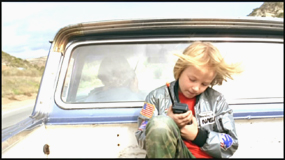
Travis continues to receive information, but fails to process the answers Walt needs and wants to hear. Soon, Travis’ perplexing behaviour turns obsessive-compulsive as he refuses to fly to LA and instead wants Walt to track down a particular rental car and take a two day trip back to southern California. Reluctantly, Walt agrees. Along the way, Travis begins to slowly open up. His character is a shy and childlike ball of turbulence. His internal conflicts produce a web of confused language and bizarre questions about his childhood.

In fact, as the film expands so does Travis’ interest in the past. Upon arriving at Walter’s home, he voraciously flips through photo albums and asks questions about his mother. Most befuddling of all he carries a picture of an empty plot of desert in Paris, Texas, which he purchased four years earlier to begin a new life for his family. According to a story told to Travis by his father, it was the land were Travis was initially conceived. While Walter believes his brother has fried his mind in the Mojave sun; in actuality Travis has begun a process of regeneration and rebirth; reverting to a childlike state and learning how to grow.

Upon his first distant meetings with his remote son, Travis appears appropriately nervous: preferring to spend time sitting on Walter’s hill-top patio with a pair of binoculars staring at the planes who fly over the house constantly throughout the day. The desert hills have been replaced with tight concrete monstrosities; while the whistling wind is usurped by a cacophony of whizzing planes, cars and sirens. Artificial lights pollute the sky in a blaze of simulated nature. Travis is perturbed by it all. He is desperately searching to return to something more organic and natural.

As he reaches a more mature stage of growth, he asks Walter’s housekeeper to help him become an ideal father. His son who previously rejected all advances to walk home with his father, now clings to his side, which worries Anne and Walt. The past becomes more resonant when Walter displays Super 8 footage from five years earlier in which Travis, Hunter and his abstracted wife Jane (Nastassja Kinski) are blissfully enjoying life. The images unearth and solder the directionless fragments in Travis’ mind. Now, he has a purpose. After being informed by Anne that Jane is possibly residing in Houston, Travis gathers his son and belongs and attempts to recover the life he once he lost and mend the past once and for all.

Paris, Texas is less a "road movie" as some critics have described it and more an existential journey for self-knowledge, as well as a commentary on the emotional complexities of modern life. Travis is desperate to rehabilitate the family he once had and realizes he must undergo his own personal psychological and emotional amendment in order to do so. This involves facing the past and regenerating himself from a childlike state to an effective father. The process is made incredibly difficult not only because of the external difficulties between father and son, but also because of Travis’ reluctant and unassertive approach to solving problems.

When Travis’ is finally reunited with Jane his response is frigid and aggressive. He detests what she has become, but more so he detests what he has forced her to become due to his past actions. Wender’s lush long takes and the performances by Stanton and Kinski during these scenes are beautiful, yet difficult. Like Bergman’s Scenes From a Marriage, Wenders traps his audience by exercising the scenes between the estranged couple in gorgeous extended takes that demonstrate the multiple sides to the couple. Upon their first meeting Travis listens while Jane talks in a meaningless, watery tone. Yet, the tables are later turned with Jane tearfully listening, while Travis concocts a painful allegory in a striking contrast to Jane’s destitute speech. It is here that we see Travis realize the folly of his four years of pain and strife.

Earlier, Travis had drunkenly told Hunter about how his father began to love his mother not for who she was as a person, but as an idea. This scene is shot in a manner that almost appears like a psychologist’s office in which Travis pours out his troubles to his son who becomes his stand-in psychoanalyst. Yet, here we begin to see how the past continues to inflict great pain on Travis. Whereas at the beginning of the film, he remained a teetotal former alcoholic, he now readily drowns himself in alcohol to try to forget the past. As he drives his antiquated truck through decrepit towns with faded Coca-Cola signs and dim-lit bars, he knows he must accomplish this task in order to bring stability and meaning to the life of his son, if not to his own.

Robby Muller’s cinematography is truly gorgeous and along with Kaufman’s Unbearable Lightness of Being and Kurosawa’s Ran, Paris Texas is one of the best looking films of the decade. It is also enhanced by Wenders colour-coded symbolism that unlike the work in PT Anderson’s Punch Drunk Love never feels forced or artificial, but rather an organic extension of the work. In my analysis, the four major colours referenced the most overtly in the picture are black, red, green and yellow. Black stands in for truth and honesty. The couch on which Travis emits his darkest secrets to his son is black, as is the clothing he wears on his second visit with Jane.

Red stands for the past and pain. The dusty red cap Travis wears in the desert symbolizes his mental agony. The crane assisting in the delicate construction of claustrophobic, emotionless new buildings is red. Upon their first sighting of Jane, father and son are wearing red, while she drives a red Chevette. The room in which Travis and Jane first talk is completely red as is her clothing. Yellow stands for change. The cap wore by Dean Stockwell when he first learns that Travis is alive is yellow. The shirt wore by Hunter when he first accepts Travis is yellow. Green seems to be the most promising colour that of hope. The second to last scene in the film is bathed in green as is Travis’ meeting with the physician. Here there is promise for something new to be created and/or rehabilitated.

The modern problems of communication are also symbolized in the film. Travis is reluctant to use modern appliances such as phones, cars, planes or trains. His attempts to be honest and forthcoming often necessitate in turning his back to the person he is trying to address. At the beginning of the film, he is often mute or talks in ambigious fragments, which fail to capture his emotions to others. Furthermore, he is unable to sleep as he is tormented by an urge to end his search.

Brilliantly acted, beautifully shot, powerfully scripted by Sam Shepard and astutely directed Wim Wenders film is a slow-burning exploration into the psychological and emotional difficulties in contemporary Western society. Despite its slow pace, the film is never dull or trite. Rather the picture is a fascinating and complex, yet emotionally difficult examination of a man destroyed by modernity and searching to rebuild the past in order to better the future of his once cherished family.

Like L’Avventura and La Dolce Vita, the film successfully examines the spiritual emptiness of modern life. Travis is a figure desperate to love, yet has realized the life he has sought for almost half a decade was nothing more than an idealized memory. His wife and their relationship have become objectified, sterile and passive. Thus, like Ethan Edwards the home Travis returns to can no longer accept his kind. The road and the desert are his only salvation: the only environment in which the remainder of his desolate life can continue.

* Paris, Texas is available on R1 DVD through Fox Home Video

Copyright 2006 8 ½ Cinematheque.

Labels: ,